Manual supply chain processes built on spreadsheets, emails, and disconnected systems create delays, errors, and poor visibility that cost businesses millions in lost efficiency. For supply chain managers, operations leaders, and IT teams, these challenges only intensify as operations scale and customer expectations rise.
Uniflowa helps businesses connect their ERP, WMS, TMS, EDI, and finance systems to automate workflows, improve data visibility, and reduce manual work across the entire supply chain.
Supply Chain Automation for Modern Businesses
Nearly 80% of global supply chain executives surveyed by Deloitte in 2023 reported facing supply chain problems, highlighting the importance of automation in navigating challenges and enhancing resilience. The root cause in most cases: fragmented systems that prevent teams from responding quickly to disruptions.
Modern supply chains require more than speed. They require control, visibility, accuracy, and scalability. When order data lives in one system, inventory in another, and shipment tracking in a third, teams spend more time reconciling information than acting on it.
Supply chain automation involves using advanced technology like AI, RPA, and IoT to optimize the movement of products among suppliers, manufacturers, retailers, and customers, minimizing errors and reducing costs. At Uniflowa, we focus on automation in supply chain management that connects your existing systems and creates reliable, repeatable workflows.
What Is Supply Chain Automation?
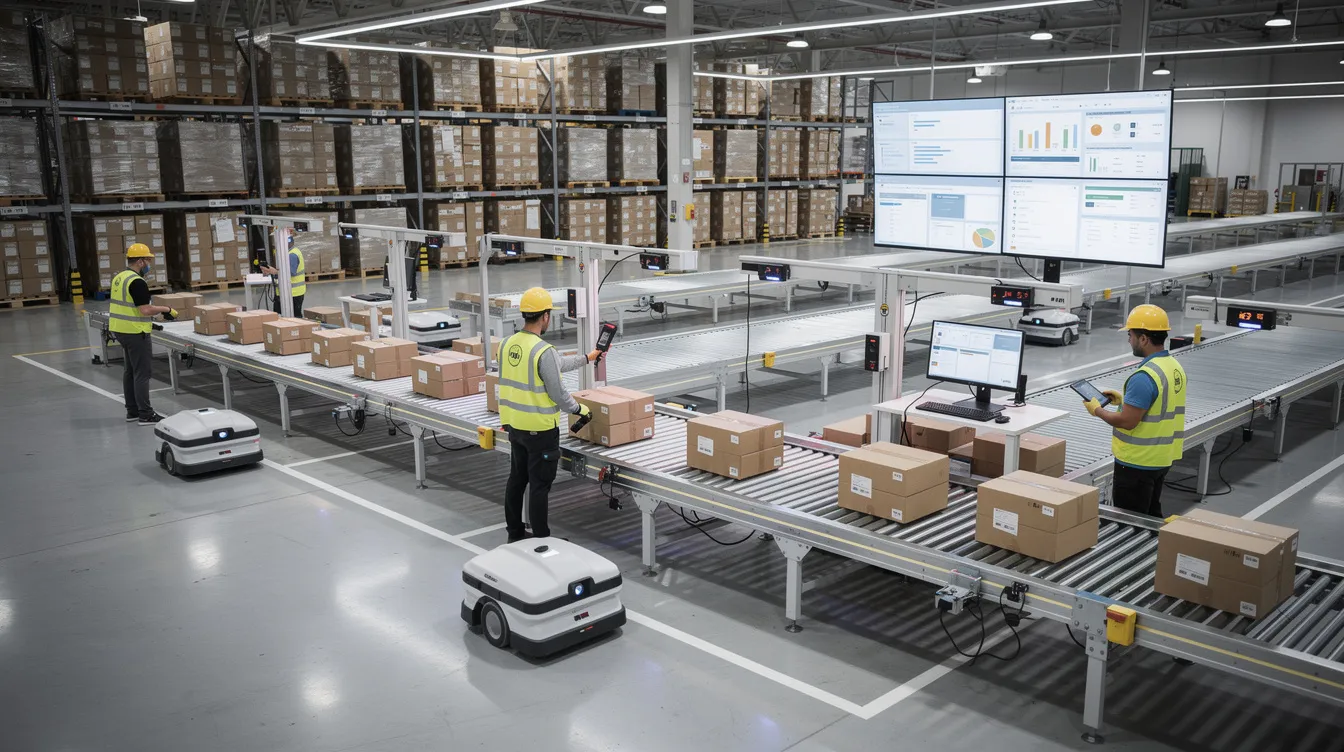
Supply chain automation refers to the use of software, integrations, and rules-based workflows to replace manual tasks across planning, sourcing, order processing, inventory management, logistics, and billing.
Rather than requiring human workers to manually transfer data between systems, automation tools handle repetitive tasks automatically. Robotic process automation RPA, artificial intelligence, and machine learning algorithms work together to process orders, update inventory levels, generate invoices, and route shipments without manual intervention.
Supply chain data integration is a key foundation for automation. Without connected, standardized data flowing between systems, automation efforts remain fragmented and unreliable. AI and robotics are increasingly used in supply chain automation to enhance efficiency, accuracy, and speed across various operations, including logistics and manufacturing.
Why Businesses Need Supply Chain Automation
Current supply chain processes at many organizations still rely on manual workflows that slow operations and introduce errors. Here’s why that needs to change.
Manual Processes Slow Supply Chain Performance
When teams rely on data entry, spreadsheets, and email-based handoffs, supply chain tasks take longer than necessary. Orders sit waiting for someone to re-key information into the ERP. Invoice processing stalls because documents need manual review.
Automation helps businesses respond to supply chain disruptions by enabling instant shipment reroutes based on real-time data and predictive analytics, allowing for timely production schedule adjustments and automated inventory reallocations. Without automation, these responses take hours or days instead of minutes.
Automated data transfer reduces manual entry errors and frees up personnel for strategic work instead of repetitive tasks.
Disconnected Systems Create Delays and Errors
Most organizations operate with multiple systems that don’t communicate effectively. Enterprise resource planning systems, WMS, TMS, EDI networks, and finance platforms often work in silos.
Middleware and iPaaS platforms connect various systems through pre-built connectors to eliminate complex point-to-point coding. Without this integration layer, teams face:
- Double data entry across multiple systems
- Mismatched inventory numbers between channels
- Delayed shipment notifications
- Invoice discrepancies requiring manual reconciliation
Unifying systems like ERP, WMS, and TMS eliminates redundant data entry, reducing human error and freeing employees for strategic tasks.
Poor Visibility Makes Automation Difficult
Fragmented order, inventory, shipment, and invoice data prevent efficient supply chain management. When supply chain professionals can’t see real-time status across operations, they can’t make informed decisions.
Enhanced visibility provides a single source of truth for real-time monitoring of inventory levels, shipment tracking, and production schedules. Integration breaks down data silos, offering a single, unified view of inventory, order status, and logistical data.
Real-time visibility allows managers to identify potential disruptions early enough to implement mitigation strategies before they impact customers.
Supply Chain Data Integration as the Foundation for Automation
Supply chain data integration is the process of consolidating and synchronizing data from ERPs, WMS, TMS, EDI networks, ecommerce platforms, and financial systems into consistent, connected workflows.
Effective supply chain automation depends on clean, timely, standardized data. This means consistent product identifiers, location codes, units of measure, and partner information flowing seamlessly between systems.
Application Programming Interfaces (APIs) enable real-time, synchronous data exchange over the web. Electronic Data Interchange (EDI) is a long-standing standard for exchanging structured business documents in batches. Extract, Transform, Load (ETL) tools are used to collect data from multiple sources, clean it, and standardize it for storage.
Uniflowa takes an integration-first approach: we map and normalize supply chain data across your systems and partners before activating automated workflows. iPaaS solutions offer pre-built connectors to simplify system integration and boost scalability, while data virtualization creates a virtual layer connecting disparate sources without physically moving data.
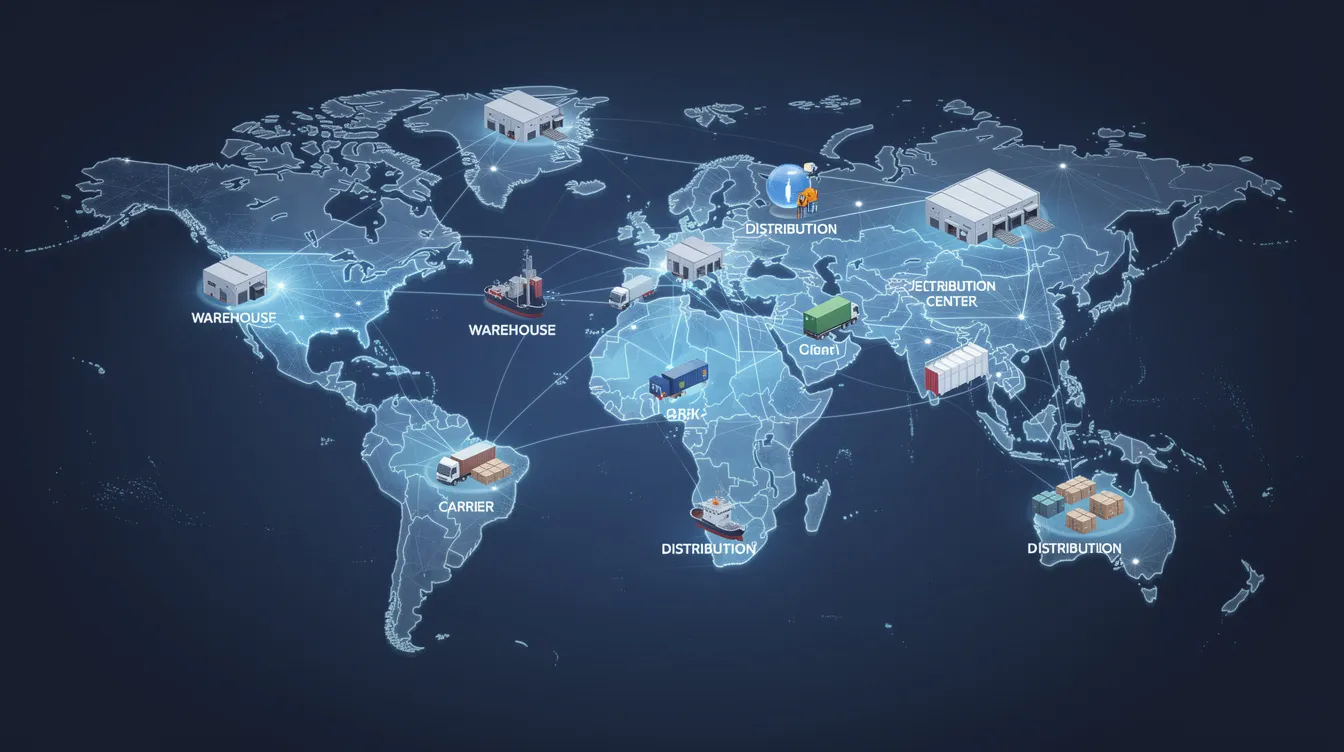
API management platforms enable secure, real-time data sharing between internal and external systems. Cloud computing offers scalable infrastructure for storing and processing large volumes of data generated by global supply chains.
Key Supply Chain Automation Use Cases
Supply chain automation use cases should solve real operational bottlenecks-not create new complexity. Here are the high-impact areas where businesses see the fastest returns.
ERP Integration for Supply Chain Automation
ERP integration connects your core business system with WMS, TMS, ecommerce platforms, and finance tools to create unified order, inventory, and financial workflows.
When a sales order arrives-whether through EDI, an ecommerce platform, or a B2B portal-it flows directly into the ERP without manual re-keying. The system checks inventory, triggers procurement if stock is low, and schedules fulfillment automatically.
Data integration allows for the automation of repetitive tasks, such as order processing and inventory replenishment. Companies can use predictive analytics to forecast demand based on historical sales data, current market trends, and economic indicators, which can trigger adjustments in production schedules and inventory levels.
EDI Integration for Automated Supply Chain Workflows
EDI integration improves partner connectivity, accuracy, and speed by translating different message formats into your internal systems automatically.
Whether you’re exchanging EDIFACT or ANSI X12 documents-orders, invoices, advance ship notices-Uniflowa maps these messages to your ERP format without custom code for each partner. EDI is reliable for consistent, large-batch data exchange with major retailers, suppliers, and logistics providers.
API and data virtualization are top choices for instant visibility when you need real-time updates beyond batch EDI. Blockchain technology integrated into the data stream provides immutable records of transactions, enhancing transparency across partner networks.
Supplier Onboarding and Supply Chain Automation
Supplier onboarding typically takes weeks when handled manually-collecting forms, validating compliance documents, and creating vendor records in multiple systems.
Automation streamlines supplier data collection, validation (tax IDs, bank details, certifications), and creation in ERP and procurement systems. Workflows automatically send reminders, validate required fields, and sync approved suppliers to purchasing tools.
Seamless information sharing with suppliers and partners fosters stronger relationships and aligns production with actual demand. Blockchain provides an immutable, shared ledger that ensures data integrity and authenticity across multiple parties involved in supplier relationships.
Order and Invoice Automation in Supply Chain Management
Order capture, validation, and fulfillment automation handles orders from multiple channels-EDI, ecommerce, B2B portals, and even email or CSV files-and normalizes them into a single order model.
The system validates pricing, availability, and customer terms, then passes orders to ERP and WMS without manual steps. After fulfillment, invoices generate automatically based on shipment and delivery confirmations.
The integration of automation in supply chains can lead to improved accuracy and reduced errors, as automated systems ensure precise data entry and real-time tracking, minimizing mistakes across the supply chain. Integrated platforms can automate routing and order processing, resulting in faster fulfillment and higher customer satisfaction.
Shipment and Inventory Visibility Through Automation
Real-time visibility through IoT and APIs allows teams to identify potential disruptions immediately, enabling faster decisions about inventory allocation and shipment routing.
Automation has significantly simplified inventory management by enabling real-time tracking of stock levels, allowing businesses to automatically update inventory counts as products are sold or restocked. Automated systems can trigger reorders when inventory levels fall below a certain threshold, helping to prevent stockouts and ensuring a continuous flow of products.
IoT sensors facilitate proactive risk management by tracking assets and creating digital models of the supply chain. The Internet of Things (IoT) uses sensors to provide real-time tracking of environmental conditions and precise location data for shipments.
By leveraging automation, companies gain insights that enable faster and smarter decision-making regarding their inventory, optimizing stock levels to align with demand.
Business Benefits of Supply Chain Automation
The benefits of supply chain automation translate directly to margin improvement, working capital optimization, and service level gains.
Faster Operational Processes
Automated supply chain operations reduce order-to-cash cycles significantly. When orders flow automatically from capture to fulfillment to invoicing, cycle times drop from days to hours.
The integration of AI in supply chain operations allows for real-time optimization of logistics and procurement, helping businesses to predict demand and mitigate potential disruptions. Automating repetitive tasks through digital process automation means faster throughput across warehouse operations, order processing, and billing.
Fewer Manual Errors
Automated systems handle data validation, format conversion, and system updates with consistent accuracy. This directly reduces chargebacks, invoice disputes, and order corrections.
High-quality data is essential for training reliable AI models in supply chain automation, as it helps improve decision-making and operational efficiency. When systems are integrated properly, data entry errors that plague manual processes become rare exceptions rather than daily problems.
Better Data Visibility
Automation enhances supply chain visibility by providing real-time insights into inventory levels, order statuses, and shipment tracking, which helps in identifying and resolving bottlenecks quickly.
Real-time visibility ensures businesses can meet regulatory standards, reducing risks associated with compliance failures. By combining historical data with real-time analytics, businesses achieve higher accuracy in forecasting demand.
Advanced analytics and AI process vast datasets to provide predictive insights, such as pinpointing production bottlenecks or forecasting maintenance needs. Data analytics is critical to supply chain automation, as it turns raw data into actionable insights predicting demand, optimizing inventory, and identifying inefficiencies.
Lower Manual Workload
Automation can significantly reduce operational costs by optimizing resource allocation, minimizing errors, and lowering labor costs, creating a more cost-effective supply chain.
Robotic systems in warehouses are designed to handle physically demanding tasks, improving safety and efficiency by reducing the reliance on manual labor for repetitive activities. Automating quality control processes and other complex processes frees customer service representatives and supply chain leaders to focus on exception handling and strategic initiatives.
AI-powered systems analyze integrated data to anticipate disruptions and optimize resources before problems arise, reducing the firefighting that consumes operations teams.
Easier Scaling Across Suppliers, Customers, and Logistics Partners
iPaaS is highly scalable and generally more cost-effective for modern, cloud-focused setups. As businesses expand to new markets or add new trading partners, integrated automation platforms handle increased volume without proportional staff increases.
Accurate demand forecasting reduces overstocking and stockouts, lowering holding costs and improving turnover. A resilient supply chain built on solid data integration can adapt to emerging trends and changing customer expectations without rebuilding processes from scratch.

Why Choose Uniflowa as Your Supply Chain Automation Company
Uniflowa is a specialist supply chain automation company focused on integration-led projects that deliver practical results. We combine deep supply chain expertise with implementation experience across ERP, EDI, API, and logistics platforms.
What sets Uniflowa apart:
| Capability | What It Means for You |
|---|---|
| Supply chain data integration expertise | We connect your existing systems rather than replacing them |
| Fast implementation approach | Start with high-value pilots and scale based on proven results |
| Flexible architecture | Support for SAP, Oracle, Microsoft Dynamics, NetSuite, and major WMS/TMS platforms |
| Multi-region capability | Handle complex partner ecosystems across North America, Europe, and APAC |
| Ongoing optimization | We monitor and improve workflows, not just deploy and disappear |
One of the main challenges of supply chain automation is the significant upfront investment required for software, hardware, and infrastructure, which can be overwhelming for smaller companies. Uniflowa’s phased approach reduces risk by proving value quickly before expanding scope.
We work closely with supply chain, IT, and finance teams to align automation with business priorities-not just technical requirements.
Get Started with Supply Chain Automation
Modern supply chains today demand connected, automated systems that provide control and visibility across every operation. Uniflowa helps businesses move from fragmented, manual workflows to integrated operations that scale.
Whether you’re looking to automate order processing, connect EDI with your ERP, improve inventory tracking, or build real-time shipment visibility, we start with your specific challenges and deliver working solutions quickly.
Ready to automate your supply chain operations?
Book a consultation to discuss your specific use case, or request a demo to see how Uniflowa connects systems and automates workflows for businesses like yours.
Supply Chain Automation FAQs
What is the first step in implementing supply chain automation? Start with a data audit to understand your current supply chain processes, system connections, and pain points. Then prioritize one or two high-impact use cases – such as order automation or inventory synchronization-to prove value before scaling.
How long does it take to see results from supply chain automation? Most businesses see measurable improvements within weeks of implementing their first automated workflow. A phased approach allows you to demonstrate ROI quickly while building toward broader transformation.
Does supply chain automation replace human workers? Automation handles repetitive tasks and data transfer, freeing your team to focus on exception handling, customer relationships, and strategic decision-making. It’s about improving efficiency, not eliminating jobs.


